Tag: procrastination

  • Reviving a Dead Blog: My New Strategy

    Reviving a Dead Blog: My New Strategy

    It’s been a couple months since I published anything on here.

    I’m back.

    Here is the plan.

    The Web Log

    I’m not going to push for 1000-1500 word self-help guides anymore. Instead, I’m going back to the roots of the blog form.

    For now, I’ll shoot for 250-500 words instead, and talk about what I’ve been up to. Things I’ve tried, things I’m working on, failures I’m trying to learn from, and other subjects that end in prepositions.

    For example, I spent winter vacation in Stowe, Vermont, working on a product to sell to small hedge funds. It’s a report that compares annual SEC filings from companies to their prior-year filings, to identify any new or deprecated risks.

    I’m still working on it, and kind of shipped a version of one to a hedge fund guy. He never responded, and I put the kibosh on the project.

    Why?

    Because I’m committing to a different strategy now. Ship first, build second. I should have ham-fisted a report with my own eyeballs and fingers first, before trying to build a computer system to do it. Then, ship that and see if there’s any interest at all.

    If there’s no interest, why waste the time banging out code!?

    Mailing list

    Besides maintaining an exciting log of my weekly foibles and follies, I’ll send out a weekly email with my latest thoughts to you lucky subscribers. No more random links, no 1500 word manifesto. Just me, sharing what’s working and what’s not, as I build in public.

    So, put down your drink, enter your email address, and hit Subscribe.

    Thanks for reading. See you next week!

  • Burn the Ships: How to Force Yourself to Risk Success

    Burn the Ships: How to Force Yourself to Risk Success

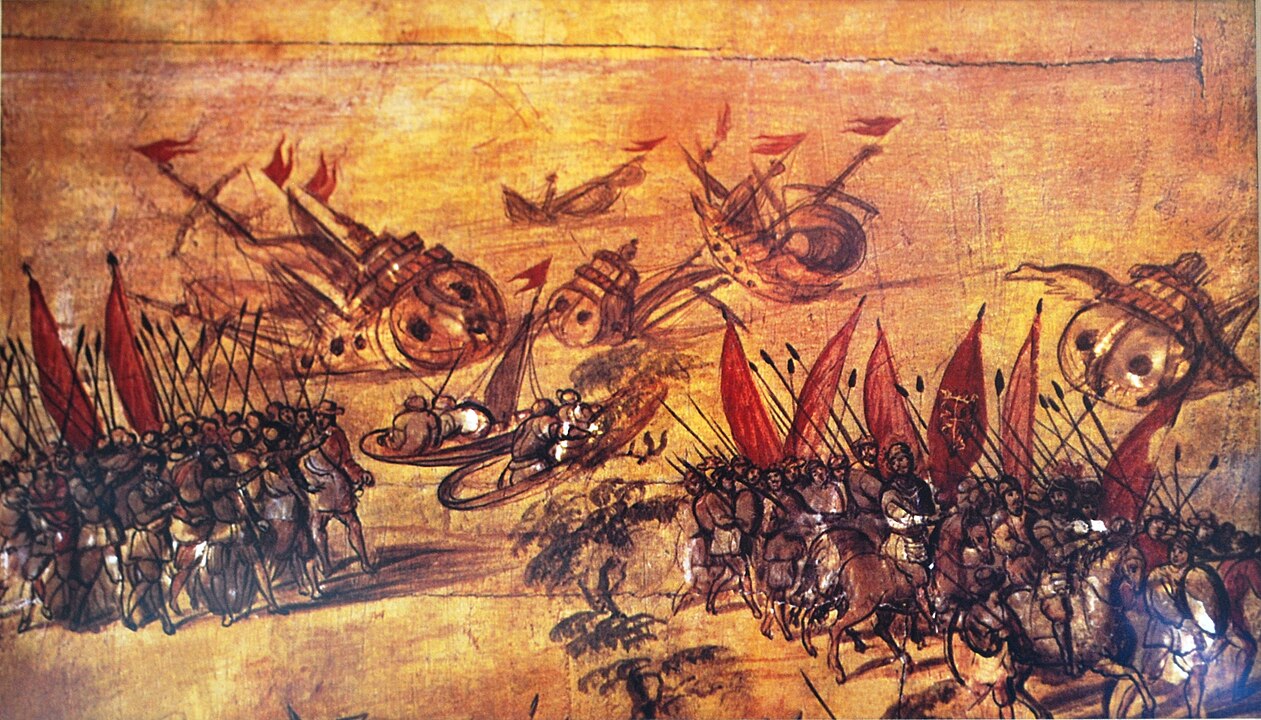
    In 1519, Hernán Cortés faced a crisis. His men, fresh off the boat in Iberoamerica, were terrified of the powerful Aztec death cult and plotting to retreat. His answer? He burned the ships.

    Cortez ensured there was no illusion of retreat. And while few of us are launching expeditions to conquer empires, we face equally paralyzing fears every day. We aren’t afraid of human sacrifice, but we are terrified of rejection, failure, and embarrassment.

    For example, success in business is dependent on building a network of people that will help you grow your enterprise. If you don’t ask someone to buy your thing, then nobody will buy your thing. But what if you suffer from social anxiety, and dying sounds like more fun than networking events?

    This article is about how to remove retreat as an option, and force yourself to risk success.

    Case Study: Phone Calls

    I have a habit of not making phone calls to anybody. Especially my family. I’ve gone years not talking to my parents, siblings, and other relatives, simply because I hate talking on the telephone.

    The phone calls are risky. What if I agree to do something I don’t want to do? What if I say something offensive? My family is pretty liberal, but I’ve turned, and now support Trump. What if they find out, and no longer love me? What if the call eats up my whole day?

    All of those are really empty fears, but they’re fear enough to make me put off a phone call until some future date, every time.

    A few months ago, I noticed that I rarely miss scheduled meetings at work, and it’s easy for me to send out a calendar appointment. I still get hit by anxiety before the actual meeting happens, but I almost always push through and do the meeting. And it usually goes much better than I anticipated.

    Then it hit me – an accepted meeting invite is more powerful than a thousand reminders.

    So, I started doing that with my family. If I wanted to call my Mom, I’d send her a text that says “Mom, I’m going to call you on X day at Y time. OK?” Then, even if I was nervous about making the call, I did it anyhow.

    Sending out that invitation burns the ships. No retreat.

    How it works

    Calling family is not really high stakes. How about making one sales pitch for your new product? Higher risk of failure, so higher risk of not making that pitch.

    In a previous article, I talked about removing friction to get things done. If you have to take two steps instead of one to perform an important action, you’re twice as likely to avoid that action. Removing all intermediate steps, though, makes it far easier to get it done.

    When you burn the ships, though, you’re adding friction. Friction becomes your friend. You’re adding friction in front of the action of avoidance. And, yes, avoidance is an action, sometimes more difficult to carry out than whatever it is you’re avoiding!

    An invitation that gets accepted introduces the friction of tarnished reputation. “If I ditch Ben today, I’ll look like a jerk.” Scheduling a presentation before an audience does the same. Anything that includes an acknowledgment by somebody that you will do something at a given time or place adds enough friction to make it hard to avoid.

    Burn a Ship Today!

    Here are three opportunities you could use today, to get yourself off the couch and into a potentially risky but profitable situation.

    1. Schedule a phone call

    That person you’ve wanted to call every weekend for the past forty weekends? Send him a text and ask if he’s available this Saturday at noon for a 30 minute phone call. Then call him.

    1. Pre-Sell the Ghost Product.

    Stop letting your idea gather dust. Email your 10 best contacts today with a non-refundable, steeply discounted pre-order price and a firm, 30-day delivery date. You don’t have a product yet, but now you have ten paying customers and a cash-backed deadline that makes retreat more expensive than work.

    1. Interview someone

    Email some idol of yours, and ask to set up an interview (phone, in person, whatever). Then, send them a Google calendar invite.

    There are all kinds of ways to leverage this tactic to make ourselves do the things we fear. What ship are you burning this week? Let me know in the comments below.

    If this article got you off the couch, please leave a comment, share it, and get on my email list!

  • Slaughter the Friction before Friction kills the Action

    Slaughter the Friction before Friction kills the Action

    So you’re going to take action that will make you awesome, like making cold calls to mining experts to fish for leads. You picked a time, a date, your phone is charged, you got a name and a phone number, nothing will stop you this time!

    The time comes and goes, and you never made the call.

    What happened?

    Something got in the way, and that something is what we call friction.

    Friction is anything that delays the completion of an action. In the case above, maybe it was that you couldn’t come up with a good sales pitch. Maybe you wore yourself out coming up with ways to overcome rejections. Maybe you needed to find a quiet place to make the call, but spent all day wandering around town. (I have done all three of these.)

    Whatever it was, some activity YOU did prevented the action from happening.

    We’re going to look today at how to identify sources of friction, and how to remove them, so there is nothing standing between you and success.

    The Source of Friction

    When you decide to start practicing some periodic action, from brushing your teeth twice a day to writing out your daily morning pages, there is always a force that will prevent you from doing that action.

    I count two main reasons that make it hard to slip a new action into your day.

    1. Fear

    Fear is the biggest factor that keeps me from taking action. For example, I get panic attacks before talking to new people. That’s the main reason I (and others) have yet to make cold calls.

    But the friction doesn’t present itself as fear. It presents itself as extra steps added between now and the target action. When I’m planning to make a call, I tend to think I need a fully worked out script, including responses to objections. I’ll spend an hour fighting with that script, then boom, no calls.

    1. Routine

    Your daily routine comes with inertia. It’s not easy to just throw something else in there.

    I think the daily routine is a human adaptation to living in a world. The daily routine can be done mostly on autopilot. This allows you to think about other things, instead of constantly considering “what do I need to do next?”

    But whatever the origin of the daily routine, your daily activities tend to fill all the available space of that day, like a gas. There’s rarely an hour in there where you’re staring at the wall thinking “wow, I wish I could fill this time with a new activity!”

    More likely, if you’re a grown up like myself, that hour is really only about five minutes long, and taken up by a well-needed break.

    Identifying Friction

    Now that we know whence the friction comes, let’s find all the points of friction in the way.

    For example, exercising every day takes a lot of time out you could be doing other things. It makes you sweaty, so you need to shower afterwards. You don’t want to exercise on a full stomach or you’ll barf, so you need to time your eating an hour before, or maybe get up earlier than usual to do it in the morning. But, that would mean going to bed earlier, which means rearranging the schedule the evening before.

    That’s a heavy lift, and a lot of it is unnecessary. But exactly which parts are the friction?

    Here’s a method for identifying what is friction versus necessary actions.

    First, list out the steps it takes to complete the target action.

    1. Get a gym membership
    2. Design a workout routine
    3. Schedule an hour for the workout
    4. Put on workout clothes
    5. Grab a bottle of water
    6. Hop in the car
    7. Drive to the gym
    8. Go into the gym
    9. Work out
    10. Drive back home
    11. Take a shower

    Second, identify the target action itself. The important step here is number 9 – Work Out!

    Look all those steps before step 9!

    Third, examine the other steps. Friction has a smell. That smell is “this could take forever”. Anything with that smell is friction

    Step one was to get a gym membership. Imagine how long it would take to find a gym, compare membership plans, compare amenities, and so on. You could spend forever on step one.

    Do you really need a gym membership to begin exercising? Maybe you can come up with a different set of exercises you can do at home.

    Notice also, the gym membership actually comprises several steps – 1, 6, 7, 8, and 10. That is a lot of work for a requirement that is not the target action.

    The gym membership is friction.

    How about step 2, coming up with the routine? This could certainly be friction, if a “routine” in your mind is more elaborate than running around the neighborhood and doing some push-ups. You could take a long time trying to develop a routine, and never actually get to the exercising part.

    Step 2 is friction.

    How about step 3, scheduling? Even this could take a while, if your calendar is a mess. This is seems like friction, but it’s not really a step that can be avoided. Maybe it can be reduced.

    Step 3 is also friction.

    Or step 4, workout clothes. Maybe you don’t have any. You need to either drive to the store and find some, or do some online shopping. Personally, any activity I pick that starts with “buy appropriate clothes” is unlikely to happen. I take forever picking clothes unless I’m in a special state of mind. But maybe this isn’t a big deal for you.

    Step 4, friction.

    Even step 5 could be a point of friction. Maybe you don’t have a bottle. Maybe you’re nuts, and think you need special water from the health food store. That’s going to steal time and momentum to solve!

    Whether or not some step can be dragged out ad infinitum depends on you. You may already have those exercise clothes, or a water bottle you’ve been hoping to take out for a run. One person’s friction could be someone else’s fuel.

    Rely on that smell of bad infinity to identify what is truly friction.

    Next, we decide what to do with all these smelly pressure points.

    Kill All Sacred Cows

    If you’re serious about your target action, then you need to be serious about eliminating the friction. You can always add some additional steps back in, but only after that target action itself has been established as part of your routine.

    All points of friction can either be completely eliminated, or shrunk to an almost trivial action.

    In the above example, you need to get down to maybe one or two steps before the exercise step. You don’t need the gym membership. Skip your lunch break tomorrow, wear your jeans and dress shoes, and exercise at home – whatever you absolutely need to do to have zero space left between you and the workout.

    Wait, wear jeans to exercise?

    Yes. If your target action is to exercise, then EVERYTHING that gets in the way can be friction. For example, how stupid would it be for you to die a few years early just because you were stuck picking exercise clothes, and could never get to the actual exercising!

    You need to look at all intervening steps as sacred cows that should be sent to the slaughter. You don’t have a pair of shorts? How bad would it really be to take your oldest pair of pants, the ones you don’t even wear anymore, hack off the legs, and just run in those?

    There used to be a crazy marathon in Australia, where the competitors run from Sidney to Melbourne, a distance of 544 miles. Back in 1983, the world record was beaten by almost two whole days! The new record holder wasn’t a high performer funded by Red Bull and Nike. He was a farmer. He ran the race in his work boots and overalls, beating the other runners by over 10 hours.

    Do not let the sacred cow stand between you and success.

    Do it!

    In summary, if you’re having trouble getting from now to target action, do the following:

    1. List the steps to accomplish the target action.
    2. Identify where that target action is in the list.
    3. Interrogate all the other steps as potential friction.
    4. For each step, ask yourself if it smells like “this could take forever”.
    5. Imagine how to complete the target action if each other step is removed.
    6. If you absolutely can’t remove a step, shrink it to something trivial to complete.

    Next time you find yourself unable to accomplish what you set out to do, interrogate yourself for friction. Assume you’re either scared or battling inertia, and find all those steps in between now and the target action. And gut them.

    You can do it.

    If you liked this article, please leave a comment below, share it with someone you know, and get on my email list!
  • Why You Wait Until the Last Minute, and How to Get Back to Work

    Why You Wait Until the Last Minute, and How to Get Back to Work

    Disclaimer: this post contains affiliate links. If you click on them and buy the products, I’ll get a cut of the profit.

    Do you feel like you’re always late for deadlines? Always “a day late and a dollar short”?

    Well, you’re not alone. Procrastination is the #1 most annoying, and debilitating, symptom of ADHD. Sure, everybody puts things off for another day, but for you and me, procrastination can be just as crippling as losing a leg.

    The constant companion of procrastination is that pernicious creep, the Inner Critic. “You’re so lazy and stupid.”

    In this article, I’ll explain why procrastination is such a problem for ADHD people, and give some tips on how to thwart this enemy for massive fortune.

    The Due Date is Tomorrow!

    Work is a challenge.

    If there is a job with a deadline down the road, it’s too easy to put it off.

    For example, I work as a data engineer for a financial company. We do sensitive investments, which means that it’s pretty important for the analysts to have their data NOW. My job is to deliver that data.

    Sometimes, the vendor (some other company that sends us data) changes the format of their data. Sometimes this isn’t a problem, and sometimes it is.

    When they change the format without telling us, and it breaks something, that’s just fine. My adrenaline’s running high, and I’m working with the analysts as a team against those irresponsible data suppliers. When the problem gets fixed, I’m a hero.

    But if they announce a change they will implement in the future, then there is real danger.

    I’m facing down a project like this right now, which is due in just a few days. I’ve known about the changes for over a month, and they even delayed the changes a few weeks. But I have not yet prepared our system to handle the changes.

    Immediate jobs face me every day, but that deadline is so far away that I can postpone the work for a little longer. And then, all of a sudden, it’s here. And so are all the other immediate problems that face me every day.

    Urgency vs. Importance

    When experts describe ADHD as a problem with executive functioning, it’s both obvious and meaningless to me. Yes, it’s hard to do what I know I should do, and easy to do what’s more interesting in the moment.

    Knowing it has to do with my executive function offers very little to solve the problem.

    One day while following the ADHD subreddit, I came across a description that explained almost everything. (I can’t find it now, so can’t link)

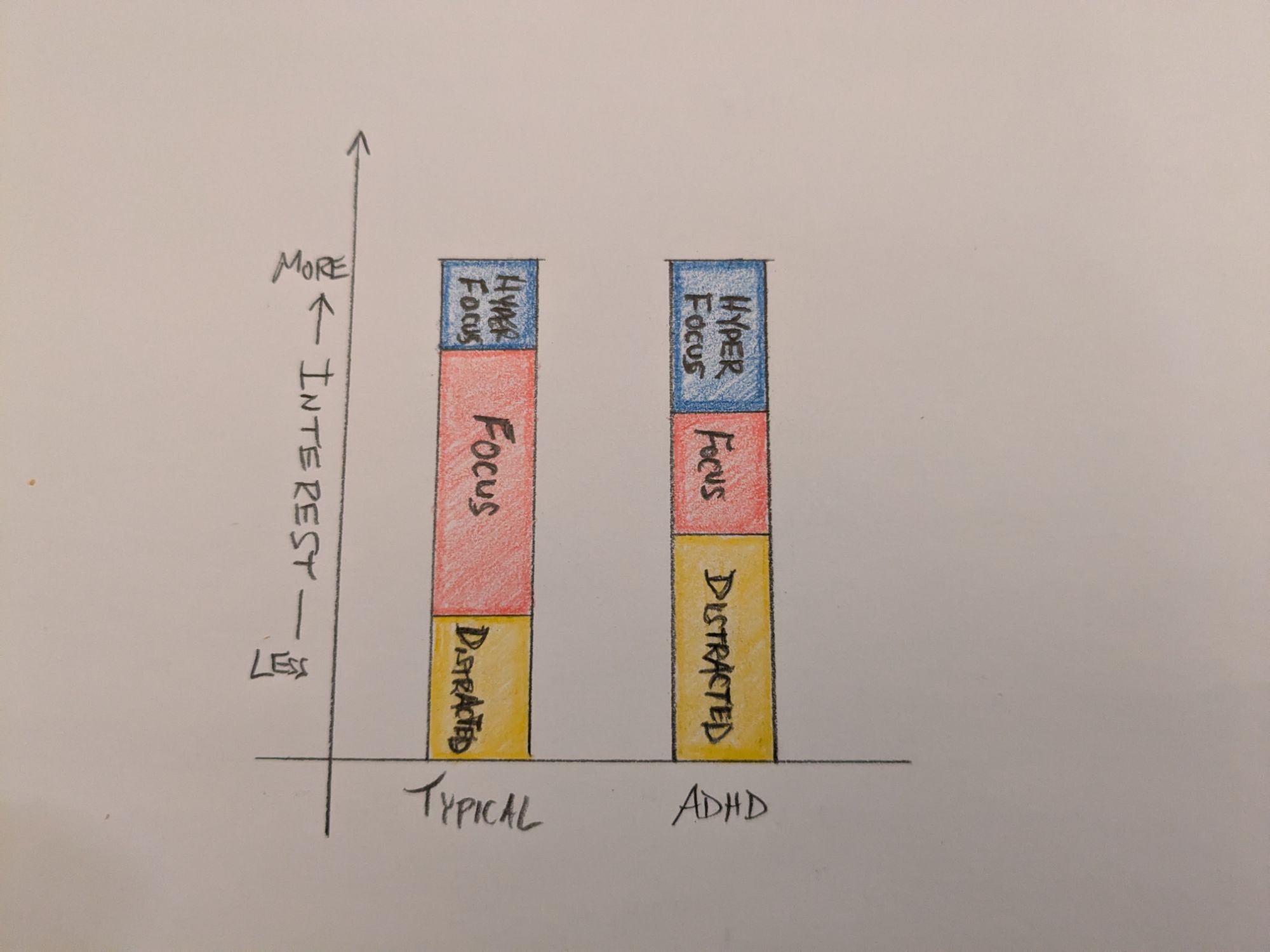
    Imagine a scale from 1 to 10. The scale represents how interesting you find some task. For most people, there’s a division around 3, at which they’re willing to get to work. For ADHD brains, that division is up around 5 or 6.

    This is why things like Adderal or Caffeine help us get to work. Stimulants help us drive that interest level over the threshold, and then we can get down to business even if we’re not really interested in the job.

    It is said that ADHD people have a special third stage normal people don’t, up near 10 on the scale. This stage, called “hyperfocus” allows us to be so obsessed with the object in our attention that the rest of the world can dissolve away, and we can work for hours.

    The problem is, activities rarely make it up to that first threshold for us. Hence, procrastination. If something’s due in a few days, it’s hard to give it the attention it needs. When the deadline is upon us, though, watch out! We get driven straight up to 10 with adrenaline, and perform miracles.

    Or disasters. Usually the end product of these last-minute sprints are mediocre performance at best, and careless accidents and disappointed loved ones at worst.

    Keys to Attention

    Here are a few tricks to subvert the usual doldrums, and get to action.

    Before we get to tricks, though, it’s important to mention that medication could be useful for you, if prescribed by a licensed professional.

    1. Start by doing the minimum

    This trick is sometimes referred to as the “2 minute rule”. The idea is, instead of trying to start a big job, pick a tiny piece of it to tackle. That tiny piece might be enough to get you interested and engrossed.

    For example, I try to get a whole blog post out every week. Sometimes that feels like a really big lift. Big enough that I’d rather check email or look out the window.

    But if instead of writing a whole article, I commit to just writing one sentence, suddenly it doesn’t seem like so much tedious work. Anyone can write one sentence! So I’ll open the laptop, fire up my editor, and take a minute to bang out a sentence.

    Typically, that one sentence turns into more.

    The point here is, anyone can do two minutes of something, even someone with a clinical diagnosis. That two minutes tends to grow to more.

    1. Use a timer

    The classic form of this is called the Pomodoro Technique. “Pomodoro” means Tomato in Italian, which is what the original timer looked like that the inventor of the technique used. Personally, I use a Time Timer at home, and an hourglass at work.

    Set a timer for 15-30 minutes. Commit to doing your work during that time, and after you can go take a break. Some people like 25 minutes, because it doesn’t have the same emotional baggage as 30.

    While working, any thought that comes into your head, just write down a reminder on a piece of paper and get back to work. You’ll be able to take up that thought in just a few more minutes.

    A protip here is to set the timer on top of your phone. That way you’ll be less likely to absent-mindedly pick it up and start scrolling.

    1. Procrastinate with another need-to-do

    If you just can’t get started on the task at hand, pick another task you need to do, and do that one instead. When that one gets unbearable, return to the original task.

    Some people find that “anything but this!” is interesting enough to capture their attention. Maybe you will too.

    1. Put your phone in a different room

    This one is important. Nothing is more interesting than your phone. Even if it doesn’t DING!!!, you will think about checking it if it’s sitting right there in front of you.

    The solution is to put that phone somewhere you can’t see it. If it’s in another room, it won’t distract you as much. Plus, having to get up to go check it might just be enough friction to prevent you from doing so.

    Get to work

    So what are you waiting for? Try one of the techniques above, and complete that task you’ve been putting off!

    Do you have a tip that helps you get work done, when you just can’t find the willpower to move? Put it in the comments below!

    If you liked this article, please leave a comment below, share it with someone you know, and get on my email list!

  • Focus on Your Fears: A Strategy for Action

    Focus on Your Fears: A Strategy for Action

    Once upon a time – OK, fine. All the time, I’m faced with fears, and risk being a coward. I’m afraid I can’t cover the bills, I’m afraid my wife will think my latest get-rich-scheme will be nuts, I’m afraid the shoes I want will look stupid on my feet. When there is something I need to do, the biggest impediment to taking action is ALWAYS my fear.

    All men have fears, but real men are not governed by them.

    Recently, I stumbled on a way to make my fears an advantage, both at work and in my personal life. If you follow the advice below, you too can make your fears a source of power, and start crushing life.

    The Problem

    Here’s the pattern; see if any of this pertains to you.

    Let’s say I’m facing a problem I don’t know how to solve, like a big bill I can’t afford to pay by the deadline. A great plan here would be to call the biller and work out a payment program, or defer the bill to a later date, or take some money earmarked for another more lenient bill. Maybe none of these are the right strategy, but they’re at least trying to solve the problem.

    Instead of taking action, I tend to think to myself, “I’ll just deal with this later today.” Later today turns into tomorrow. Tomorrow turns into the next day. Before you know it, the deadline’s here and I need to panic and do something now! It doesn’t help things that I also need to tell my wife what’s wrong, and pretty much force her to go along with my panic plan.

    It’s usually some variation of this.

    1. Get confronted with a situation that inspires fear
    2. Plan to come up with a plan to deal with it at a later time
    3. Keep planning to think about it
    4. Slam into the situation with no plan or preparation, and cause a cascade of other problems.

    Sometimes, I’ll even forget about the problem I fear, until it’s too late.

    The deep issue here is clear – I’m trying to protect myself from getting hurt in the near term, by putting that hurt into the future and trying to wish it away.

    Imagine if this was how the US Congress worked when considering the national deficit! Oh, wait, that is how the Congress deals with things like this.

    There must be a better way.

    If you watch Instagram, you’ll know that the only way to deal with fears like this is to feel your feelings and stare your fears down and come into yourself and not be a victim of trauma and whatever.

    Instead of that, I’ll present here a realistic, concrete way to deal with fears, by hunting for them and making them work for you instead of against you.

    The Clue, from Work

    I stumbled on this technique while worrying about something at work.

    I’m a data engineer for a pretty successful hedge fund. One of the situations I get faced with often is data quality. In other words, for a given data set, do we have all the data? Are we missing any data? Is there any overlap or double counting? What should I even expect to see?

    One day, I was given a data set that had been manually loaded by someone else months ago. My job was to automate the loading, but make sure everything got loaded properly.

    A gnawing fear started to grow in the pit of my stomach. How do I determine what “properly loaded” even means in this case? I don’t even know what the data is supposed to represent! Maybe the existing data set isn’t even loaded properly!

    While dealing with this mounting pile of fears for a specific project, it struck me: a document that laid out how to know if the data was right, complete, and nothing more, would quickly help me get peace of mind. Well, why shouldn’t I be the one to write the document? It could help someone else who was faced with a similar problem down the line; it could even help future me.

    The problem here was not that I didn’t know how to validate data. The problem was that the fear was causing paralysis.

    The solution, therefore, wasn’t a series of steps to ensure data quality in a messy data set. The solution was rather a strategy to face down a specific fear that stops me from acting.

    For this specific case, I’ve adopted a habit now of starting every project – whether new or hand-me-down – with the documentation. If there is no existing document, I’ll create one; if there is documentation, I’ll add to it. Besides standard boilerplate information (owner’s email, source and target locations, etc.), I’ll address any question about the project that give me the least bit of worry or uncertainty.

    Three steps to courage and universal acclaim

    I’m still in the process of distilling the strategy; here is the current working version.

    1. Identify your fears

    Right after lunch each day (or at 1:00 pm if I miss lunch), I spend about 2 minutes brainstorming about things that are giving me the willies. These get scrawled out on whatever scrap of paper is near me – usually a catchall notepad on my work desk. After doing this, I’ll eat a small, tasty dessert to reinforce the habit.

    Sometimes I have a hard time getting started, even though I know those fucking fears are in there. In this case, it helps to have a few categories to interrogate. Maybe you will have a different list, but here’s mine:

    • Relationship with Wife
    • Kids and school
    • Upcoming social events
    • Bills
    • Upcoming trips
    • Work
    • Communications (emails, texts, phone calls that need to happen)
    1. Pick one and dress it down

    Trying to take on all the fears will just overwhelm you, so for now just pick one. Schedule fifteen minutes later that day to interrogate this fear. Right now, open your calendar app (get one if you don’t have one – Google, Microsoft, Apple, whatever), and block out fifteen minutes.

    Now, when that time comes, dig into that fear and figure out why it gives you the heebie-jeebies, or at least why you’re avoiding action.

    For example, say your utility bill is way over budget – isn’t it always? Maybe the gateway fear is, “I don’t know where I’m going to get the money for this.” What happens if you don’t pay the bill? More fears – “what if they shut off the electricity?”, “What if they charge a late fee?”, “What if Wife finds out?” Tear the fear into pieces so you know exactly what you’re dealing with.

    1. Identify a core fear that prevents action

    Your core fear identifies one uncertainty that prevents you from taking action. That uncertainty then points to a new habit you can build, so the fear can get effectively neutralized.

    Take our bill example from above. The core fear is “I don’t know if I’ll screw myself later by paying for this bill now.” In other words, it’s fear of an unknown money situation.

    1. Create a habit to address the fear

    Now that you have shined a light on a specific fear, build one habit to start handling the cause of the fear.

    The habit to build in in our bills example is, start tracking your money. Granted, easier said than done. But, a relatively quick first solution here is to start using some kind of budgeting software to track your income and expenses. These programs usually do a mildly good job of forecasting where you will be a short time in the future, like a few months. Some good apps are Simplifi, You Need A Budget, or EveryDollar.

    Your habit can be to open that app every day during your first coffee break. Spend 5 minutes to look at your current balance and review bills coming down the line.

    The path to integrity

    Notice, this is NOT a strategy to help deal with that one particular problem. It’s a strategy for hunting down weak spots in your life, so these areas can be strengthened. It’s a strategy for becoming a more powerful person overall, which will in turn make these small problems far easier to handle in the future.

    Right now, grab the nearest piece of paper and a writing instrument, and take two minutes to write down the tasks that worry you. Afterwards, pick one and use its underlying fears to guide you towards stronger behaviors.

    If you liked this article, please leave a comment below, share it with someone you know, and get on my email list!